
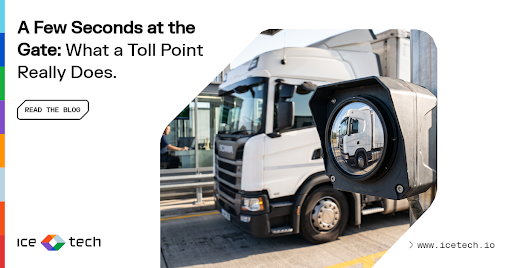
There is a moment at every tollgate that lasts only a few seconds. You slow your vehicle down approaching the gate, you make a payment, and you are through. From the driver’s seat, it can feel like barely a pause, a brief break on a longer journey. Yet inside those few seconds, a surprising amount has to happen, and happen correctly.
A toll point is one of the busiest meeting places in a country’s transport network. It is where the road, the government’s revenue and the person behind the wheel all come together at once. In the time it takes a boom to lift, the system has to capture the vehicle’s number plate, identify its class, determine what it owes, process the payment and, where it is connected to the vehicle register and enforcement systems, flag anything worth a second look. All of it, in the space of a breath.
When those jobs run on separate systems, the seconds begin to stretch. Queues build behind the boom. Some revenue slips through the gaps between one process and the next. And a vehicle that deserved a second look moves on before anyone had the chance to give it one. The tollgate ends up doing less than it could, at exactly the point where it could do the most.
ICE Tolling brings all of it into one flow. As a vehicle approaches, automatic number plate recognition captures its number plate and creates a record, while automatic vehicle classification confirms its class for post-collection auditing. The correct fee for that class is identified and settled through whichever payment method suits the road user. Every transaction is recorded and reconciled as it happens, so the money is accounted for rather than reconstructed later.
It works as one complete system rather than a set of parts bolted together. Software, hardware, and network run as a whole. A control room sees the plazas live. Dashboards turn each day of activity into a clear operational picture. And every cent that passes through the gate leaves a record that holds up.
For a government, this is where tolling earns its keep. Stronger revenue assurance means the fees collected on a road are the fees that can come back to maintain it. Better operational insight means decisions about traffic, capacity, and compliance rest on what is actually happening, live. A toll network stops being only a place to collect, and becomes a place to see.
For the person in the car, the change is quieter and welcome. Movement that is faster and steadier. Payment that fits how they already pay for things. A journey where the gate is a pause rather than a wait. The toll they pay is doing something they can feel further down the road, in the surface under their wheels.
That, in the end, is what good infrastructure does. It works so smoothly that you barely notice it, while quietly funding the very thing carrying you forward. Across Africa, roads are being built and rebuilt with real ambition, and tolling that is accurate, fast, and fully accounted for is part of how that ambition pays for itself.
A few seconds at the gate. A road that keeps building.


