
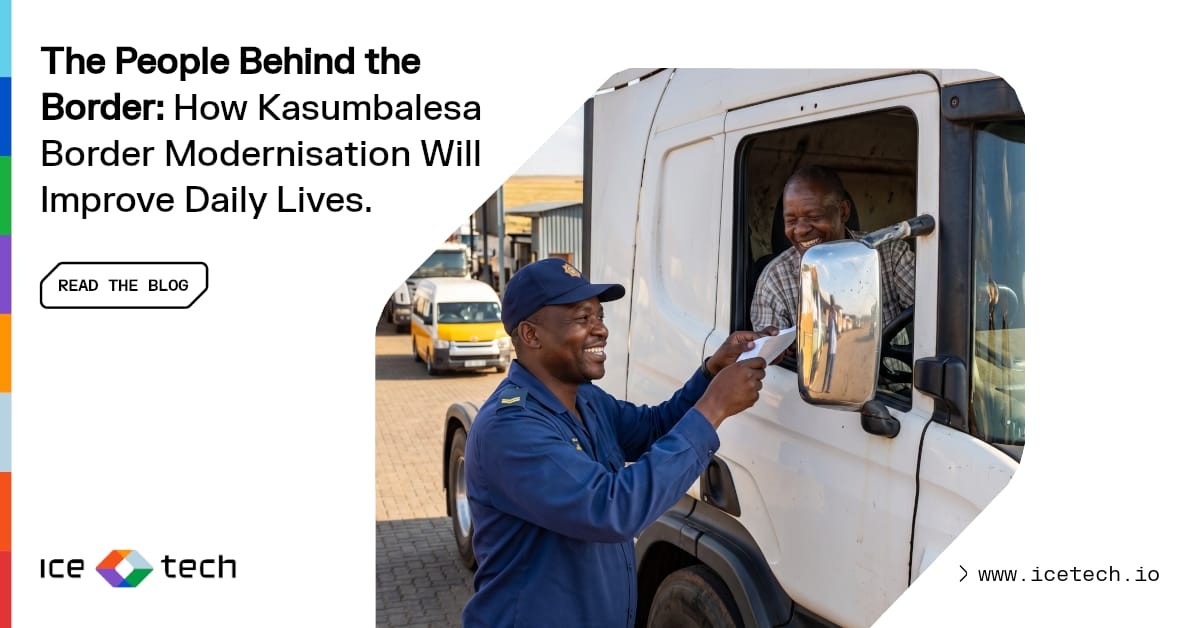
A border post is often spoken about in terms of infrastructure, systems, trade routes and national revenue. Those things matter deeply, especially at a border as important as Kasumbalesa. But behind every vehicle movement, every inspection, every clearance process and every security check, there is a person whose day is shaped by how well that border works.
There is the security official trying to maintain order in a high-pressure environment. There is the customs officer working through documentation while queues continue to build. There is the truck driver waiting to move, knowing that every delay affects delivery times, income, rest, safety and time away from home. There is the business owner waiting for goods to arrive, the trader moving stock across the border, the traveller hoping for a smoother journey, and the government agency responsible for protecting revenue while keeping people and goods moving.
This is the human side of border modernisation.
Why the Kasumbalesa Border Post Matters
Kasumbalesa is one of the most important movement points in the region, connecting Zambia and the Democratic Republic of Congo through a corridor that carries significant commercial, social and economic weight. What happens at this border reaches far beyond the physical site. It affects supply chains, local businesses, government operations, regional trade, security, and the thousands of people who depend on the border functioning with discipline and efficiency.
That is why the work taking place at Kasumbalesa matters.
For ICE Tech, this project carries a serious responsibility. The goal is to help create a border environment that is more coordinated, more visible, more accountable and more responsive to the realities on the ground. Technology plays a central role in that process, but the deeper purpose is very practical.
ICE Tech’s border technology is designed to enhance control, reduce border delays and protect national revenue, while supporting agency integration, digital inspections, queueing, compliance checks and traffic management.
How Border Modernisation Supports Security Officials
For security officials, visibility changes the job.
A border is a live operational environment. Vehicles are moving, people are crossing, documents are being checked, goods are being inspected, and multiple agencies are working side by side. In that environment, uncertainty creates pressure. When officials have clearer visibility over vehicle movement, access points, compliance status and operational flow, they are better equipped to make decisions with confidence.
Stronger digital systems help security teams manage movement with greater control. They support more consistent checks, clearer processes and a better understanding of what is happening across the site. That matters because security at a border depends on coordination, timing, information and the ability to respond quickly when something requires attention.
Helping Customs and Immigration Officials Work More Efficiently
Border officials work under constant pressure. They are expected to process people, vehicles and goods efficiently while protecting the integrity of the border and enforcing the rules that govern movement. When systems are fragmented, even experienced officials can spend unnecessary time chasing information, checking documents manually, waiting for approvals, or trying to coordinate across separate processes.
A more integrated border environment helps change that. When agencies are connected through clearer workflows and better information flows, officials can focus more of their time on decision-making and less of their time managing avoidable administrative friction. The result is a working environment that supports the people carrying the operational burden every day.
ICE Tech’s border control solutions include government agency system integration, automated vehicle identification, verification, access coupon generation, queueing functionality, mandatory compliance checks and tracking of vehicle movements across critical border access points.
Why Truck Drivers Benefit from Faster Border Processing
Truck drivers are among the people who feel border inefficiency most directly. A delay at a border can mean hours or days spent waiting in difficult conditions. It can affect delivery schedules, rest time, personal safety, earnings, and time with family. For many drivers, the border is a regular part of working life, and the quality of that experience has a real human cost.
When movement becomes more organised, when queues are managed more effectively, and when processing becomes more predictable, the benefit is felt in a very practical way. A driver who moves through the border with greater clarity and less uncertainty can plan better, rest better, communicate better with dispatch teams, and return to the road with a stronger sense of control over the journey.
That is one of the most important parts of this project. Border modernisation should improve the experience of the people who keep trade moving.
Supporting Logistics Companies, Importers and Exporters
Businesses that move goods across borders depend on timing. A shipment delayed at the border can affect production, sales, stock availability, customer commitments and cash flow. For logistics companies, unpredictable border movement makes planning harder. Much harder.
A better-functioning border helps businesses operate with greater certainty. They can plan routes with more confidence, communicate timelines more accurately, and reduce the operational strain that comes from uncertainty.
At a broader level, this supports trade. A border that moves efficiently gives businesses greater confidence in the corridor. It strengthens the link between infrastructure, commerce and economic activity.
Improving Daily Life for Cross-Border Traders and Local Businesses
The impact of Kasumbalesa also reaches the smaller businesses and informal traders who depend on activity around the border. Fuel stations, food vendors, mechanics, accommodation providers, transport operators, retailers and service businesses all form part of the local economy around a major border post.
These are the people who are often left out of infrastructure conversations, yet they are deeply connected to the success of the border. For them, a more efficient Kasumbalesa is linked to daily income, customer flow and economic opportunity.
Creating a Better Border Experience for Travellers and Tourists
A border crossing can be stressful for ordinary travellers, and a border is often one of the first points of contact between a person and a country’s public services. When that experience feels organised, professional and responsive, it strengthens confidence. It shows that government systems can work in a way that respects people’s time and supports their movement.
ICE Tech’s wider mission is linked to improving government compliance, revenue collection, service delivery and the overall citizen experience, which makes the traveller experience a central part of the broader modernisation story.
Strengthening Government Revenue and Service Delivery
The value of border modernisation also sits at national level. Governments need border systems that support compliance, protect revenue, and improve visibility. A border that operates with better information and stronger coordination gives government agencies a clearer view of what is happening and a stronger basis for action.
That has direct implications for revenue collection and protection. When payments, approvals, inspections, compliance checks and vehicle movements are handled through stronger systems, government can reduce leakage and improve the quality of service delivered to citizens and businesses.
This is where the human and institutional impact come together. Stronger government systems support stronger public outcomes. They help create the resources, confidence and operational discipline needed to serve people better.
ICE Tech’s Role in Border Modernisation
The Kasumbalesa project is about building systems that can work in a demanding real-world environment, where pressure is constant and multiple stakeholders depend on the outcome.
ICE Tech’s role is to help digitise and connect critical parts of the border operation so that the people working inside the system can do their jobs with better tools, better visibility and better coordination. The technology matters because of what it enables: better service delivery and a border experience that works comfortably for everyone involved.
The Real Impact of a Modern Border
When Kasumbalesa goes live, the progress will be visible in the infrastructure, the systems and the movement through the site. But the deeper achievement will be found in the people behind the border.
The official who has better information in front of them. The truck driver who spends less time waiting. The business that can plan with greater confidence. The trader who moves with more clarity. The traveller who experiences a more organised process. The government agency that can protect revenue and deliver a stronger service.
That is the real promise of border modernisation.
A border that works better improves the daily reality of the people who keep countries connected.


